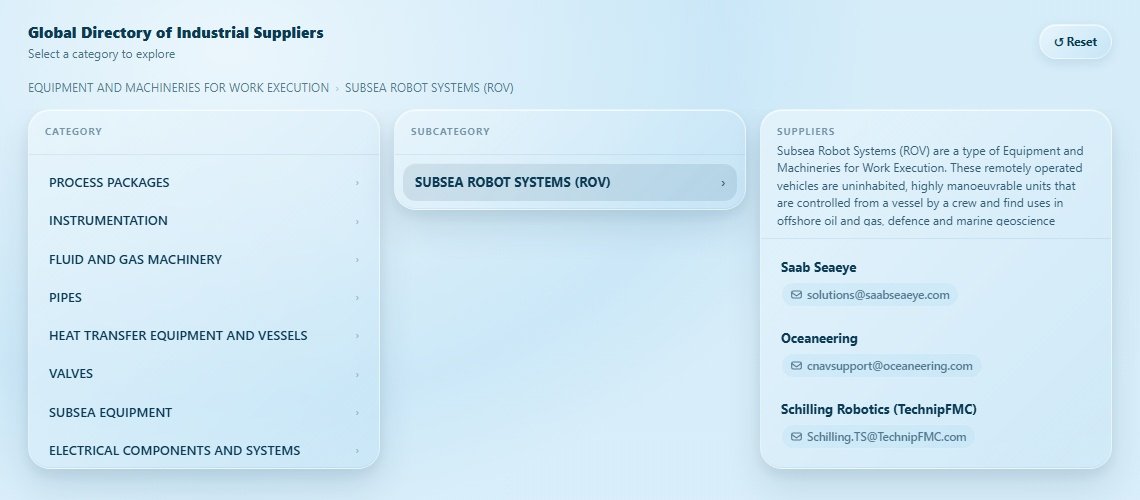

SUBSEA ROBOT SYSTEMS (ROV), a type of EQUIPMENT AND MACHINERIES FOR WORK EXECUTION.
Subsea Robot Systems (ROV) are a type of Equipment and Machineries for Work Execution. These remotely operated vehicles are uninhabited, highly manoeuvrable units that are controlled from a vessel by a crew and find uses in offshore oil and gas, defence and marine geoscience operations. They are grouped by their working capability at the seabed: Observation?class units, used primarily for deep ocean research as well as search and salvage work, cover micro, mini and ultra?deep configurations; heavy?duty work models are capable of carrying at least two manipulators and operate down to depths of around 3?500 m; light? and medium?duty work models usually have engines rated under 50 hp, often use polymer chassis such as polyethylene instead of conventional stainless steel or aluminium alloys, and are suited to depths below roughly 2?000 m. Tether?management systems store and deploy the tether cable so that the vehicle is decoupled from the surface vessels motion and can work at a greater radius. Additional tools and instruments used to extend the capabilities of subsea robots are covered under a separate instrumentation subcategory. Autonomous underwater vehicles (AUVs) differ from ROVs in that they travel underwater without requiring operator input.